Patient Engagement: The Technology That Transforms Pharmacy Relationships
The greatest clinical skill in the world means nothing if patients do not show up, stay enrolled, or follow through. Patient engagement is the single largest predictor of health outcomes in community-based care — and pharmacies are uniquely positioned to own it.
Yet most pharmacies still treat engagement as informal. A friendly conversation at the counter. A verbal reminder to come back. A hope that patients will remember their next appointment.
Hope is not a strategy. A pharmacy engagement platform is.
The pharmacies building lasting health relationships are not relying on chance encounters. They are building systems that keep patients connected, informed, and progressing between every visit.
What Patient Engagement Really Means in Pharmacy
Patient engagement pharmacy models go far beyond appointment reminders. True engagement means the patient is an active participant in their own health journey — and the pharmacy provides the infrastructure that makes participation easy, consistent, and rewarding.
Engagement includes:
- Two-way communication — Patients can ask questions, report progress, or raise concerns outside of in-person visits
- Education delivery — Relevant health content reaches patients based on their conditions, goals, and program stage
- Adherence support — Medication and program adherence tracking with proactive intervention when gaps appear
- Progress visibility — Patients can see their own data, trends, and milestones
- Community connection — Patients feel part of something larger — a wellness community anchored by their local pharmacy
When these elements work together, patients do not just fill prescriptions. They engage in care plans, attend follow-ups, complete screenings, and refer their neighbors. That is the difference between a transaction and a relationship.
Why Traditional Pharmacy Communication Fails
Most independent pharmacies rely on a narrow set of communication tools: phone calls, text reminders from the dispensing system, and in-person conversations. These are not enough for several reasons.
They are one-directional. The pharmacy pushes messages out. The patient has no easy channel to respond, ask questions, or share updates.
They are generic. Every patient gets the same refill reminder regardless of whether they are in a wellness program, managing a chronic condition, or simply picking up a one-time prescription.
They are disconnected. Communication happens in isolation — a text here, a phone call there — with no unified view of the patient's engagement history.
They lack content depth. A refill reminder is not engagement. Engagement requires educational content, motivational messaging, progress tracking, and personalized touchpoints that build trust over time.
A pharmacy patient communication platform solves these problems by creating a unified, multi-channel, personalized communication ecosystem around every patient.
Core Features of a Pharmacy Engagement Platform
When evaluating a pharmacy patient portal or engagement platform, look for capabilities that go beyond basic messaging.
Multi-Channel Communication
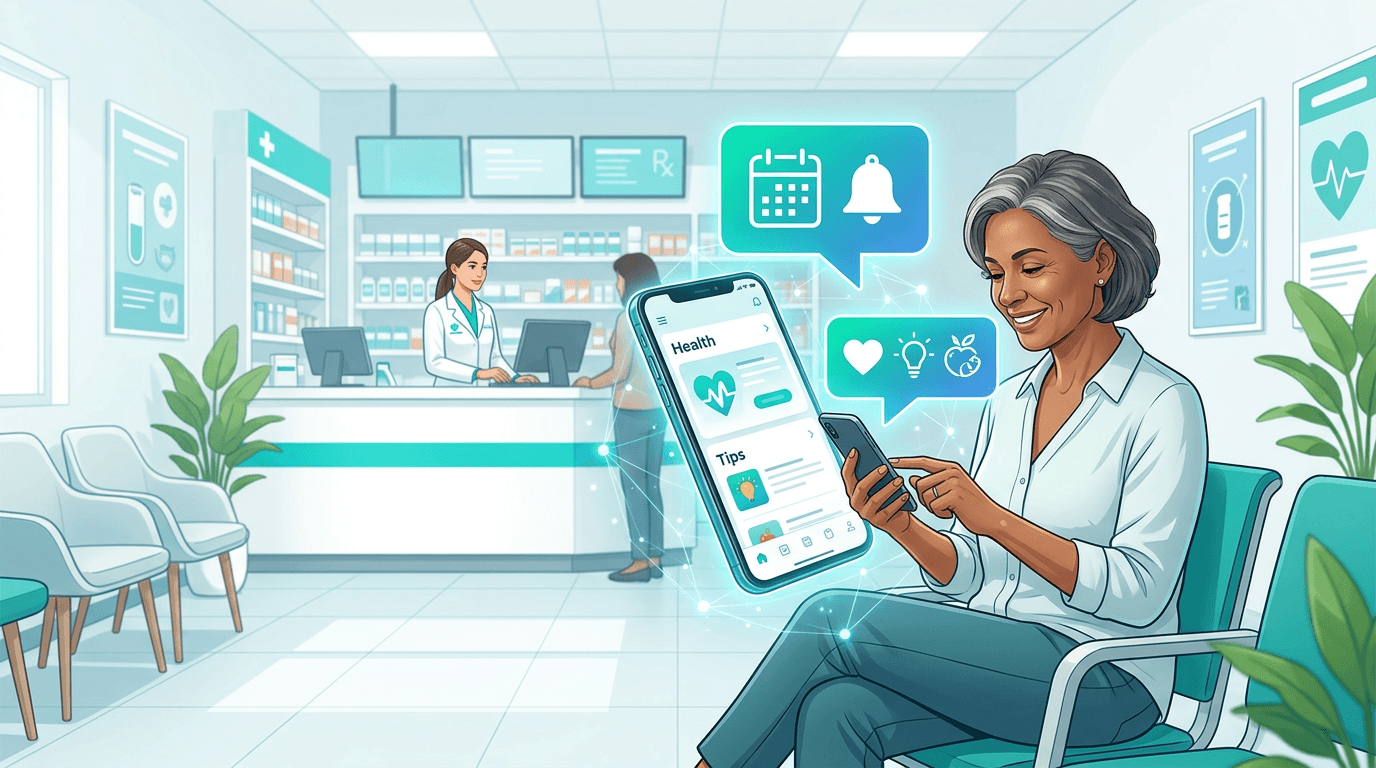
Patients prefer different channels. Some respond to text messages. Others prefer email. Some want app-based notifications. The platform should support SMS, email, push notifications, and in-app messaging — with patient-level channel preferences.
Personalized Content Delivery
The platform should deliver educational content matched to patient profiles. A patient enrolled in a metabolic health program receives nutrition tips and progress encouragement. A patient managing diabetes receives medication adherence support and blood glucose monitoring guidance. Content should feel relevant, not mass-marketed.
Adherence Monitoring and Alerts
Pharmacy adherence platform capabilities are critical. The system should track medication refill patterns, program appointment attendance, and wellness check-in completion. When a patient falls off track, automated alerts prompt both the patient and the care team.
Patient Self-Service
Empower patients to schedule appointments, view their health data, access educational resources, update their information, and communicate with your team — all without calling the pharmacy. Self-service reduces staff burden and increases patient satisfaction.
Outcome Tracking Integration
Engagement data should flow into your outcomes tracking system. How many touchpoints did a patient complete? What is their adherence rate? How does engagement correlate with health outcomes? This integration turns engagement into measurable evidence.
Feedback and Surveys
Build in mechanisms for patients to share feedback — satisfaction surveys, Net Promoter Score prompts, and program evaluations. This data improves your programs and demonstrates patient-centered care to funders and partners.
The RXI Wellness Pharmacy Model
The Wellness Pharmacy Network enables pharmacies to implement evidence-based programs that address nutrient deficiencies, reduce medication dependency, and improve long-term metabolic outcomes.
Building a Pharmacy Wellness Engagement Strategy
Technology alone does not create engagement. You need a strategy that defines when, how, and why you communicate with patients at every stage of their journey.
Define Your Patient Segments
Not every patient needs the same engagement approach. Segment your population:
- Active wellness program participants — High-touch, frequent communication with progress tracking and milestone recognition
- Chronic condition management patients — Adherence-focused messaging with educational content and clinical check-in prompts
- General pharmacy patients — Lighter engagement with seasonal health content, screening invitations, and service awareness
- Lapsed patients — Re-engagement sequences designed to bring them back
Map Communication Touchpoints
For each segment, define the communication cadence:
- Weekly for active program participants — progress updates, tips, encouragement
- Bi-weekly for chronic condition patients — adherence check-ins, educational content
- Monthly for general patients — health awareness content, new service announcements
- Triggered for lapsed patients — re-engagement sequences activated by inactivity thresholds
Create Content That Earns Attention
Engagement content must provide genuine value. Avoid purely promotional messaging. Build a content library that includes:
- Health education articles tailored to your patient population
- Quick tips — actionable health advice in under 60 seconds
- Success stories — anonymized patient outcomes that inspire and build trust
- Program spotlights — deep dives into your wellness offerings
- Community health updates — local health events, seasonal alerts, and preventive care reminders
Measuring Engagement That Matters
The metrics you track should reflect genuine health engagement, not just marketing vanity numbers.
- Active engagement rate — What percentage of enrolled patients interact with the platform at least once per month?
- Content open and action rates — Are patients reading, clicking, and acting on the content you send?
- Adherence improvement — Do engaged patients show better medication and program adherence than non-engaged patients?
- Appointment follow-through — What percentage of scheduled appointments are kept by patients receiving engagement communications versus those who are not?
- Program completion rate — Of patients who start a wellness program, how many complete the full cycle?
- Patient satisfaction scores — Are engaged patients reporting higher satisfaction with their pharmacy experience?
These metrics connect engagement to outcomes — and outcomes to value. This is the data that supports grant applications, payer negotiations, and employer program contracts.
Overcoming Common Engagement Barriers
Pharmacies frequently encounter predictable challenges when implementing engagement platforms. Plan for them in advance.
Staff resistance. Some team members will see the platform as extra work. Frame it as a time-saver — the system automates what they are currently doing manually, freeing them for higher-value clinical interactions.
Patient adoption. Not every patient will adopt a digital engagement platform immediately. Start with your most engaged patients, demonstrate value, and expand. Offer in-person onboarding assistance for less tech-savvy populations.
Content creation burden. Building a content library feels overwhelming. Start small — one piece of content per week. Use templates. Repurpose existing materials. Partner with health content providers. Over time, your library compounds.
Data privacy concerns. Patients may hesitate to share health data digitally. Address this directly with clear privacy policies, HIPAA compliance messaging, and transparency about how their data is used and protected.
Dr. Kathy Campbell, PharmD
Founder, Wellness Pharmacy Network
With decades of experience transforming community pharmacies into wellness destinations, Dr. Campbell has pioneered the integration of Food-as-Medicine programs, metabolic health tracking, and preventive care models into independent pharmacy practice. She leads the RX Institute in its mission to equip pharmacists with the tools and training to become the front line of community health.
The 30-Day Engagement Platform Launch Plan
Week 1: Audit and Strategy — Review your current patient communication. Identify gaps, missed follow-ups, and opportunities. Define your initial patient segments and communication goals.
Week 2: Platform Selection — Evaluate platforms against the criteria above. Prioritize HIPAA compliance, integration capability, and ease of use. Request demos with pharmacy-specific use cases.
Week 3: Content and Workflow Setup — Build your initial content library (at least 10 pieces). Configure your first automation workflows — welcome sequences, adherence reminders, and program check-ins.
Week 4: Launch and Train — Onboard your team. Import your patient base. Activate your first engagement campaigns. Monitor early metrics and adjust.
"The pharmacy that communicates with intention, consistency, and genuine value becomes more than a place patients visit. It becomes the health relationship they rely on — and the engagement platform is the system that makes that relationship scalable."
Download the Patient Engagement Strategy Guide
Get actionable strategies and frameworks you can implement today.
Download Free Guide